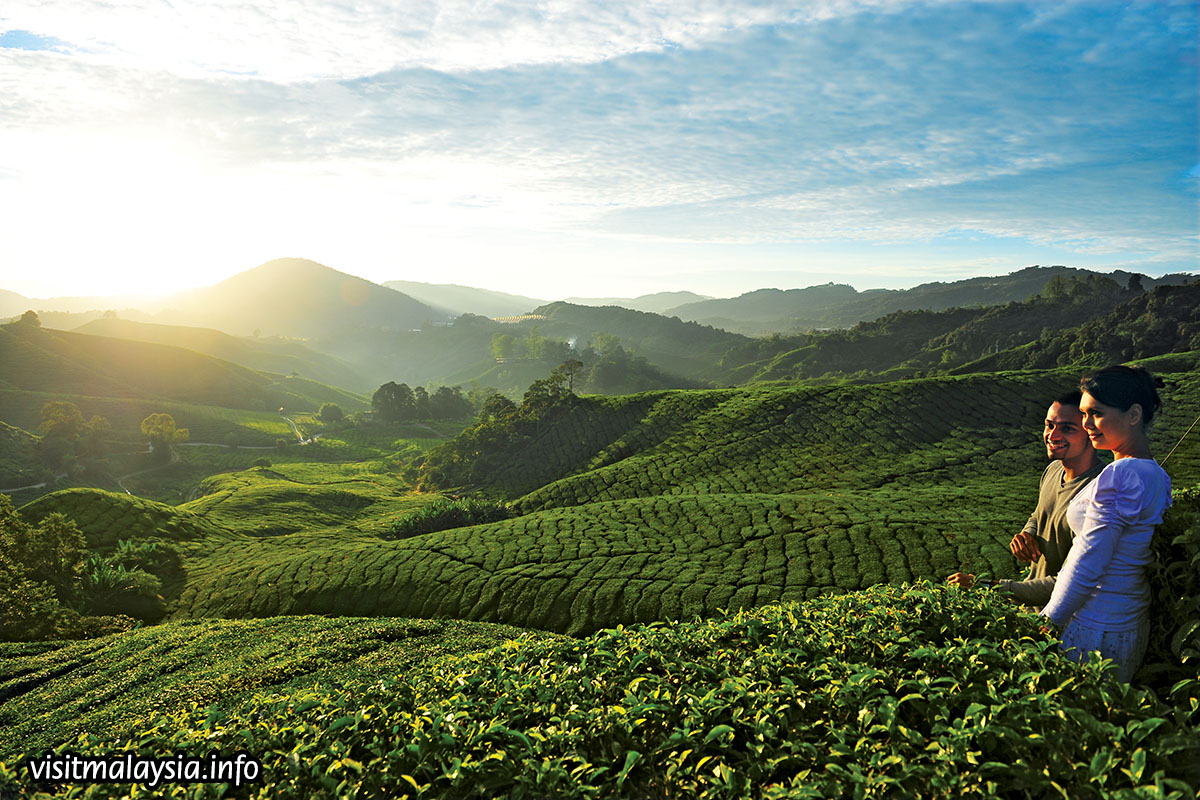
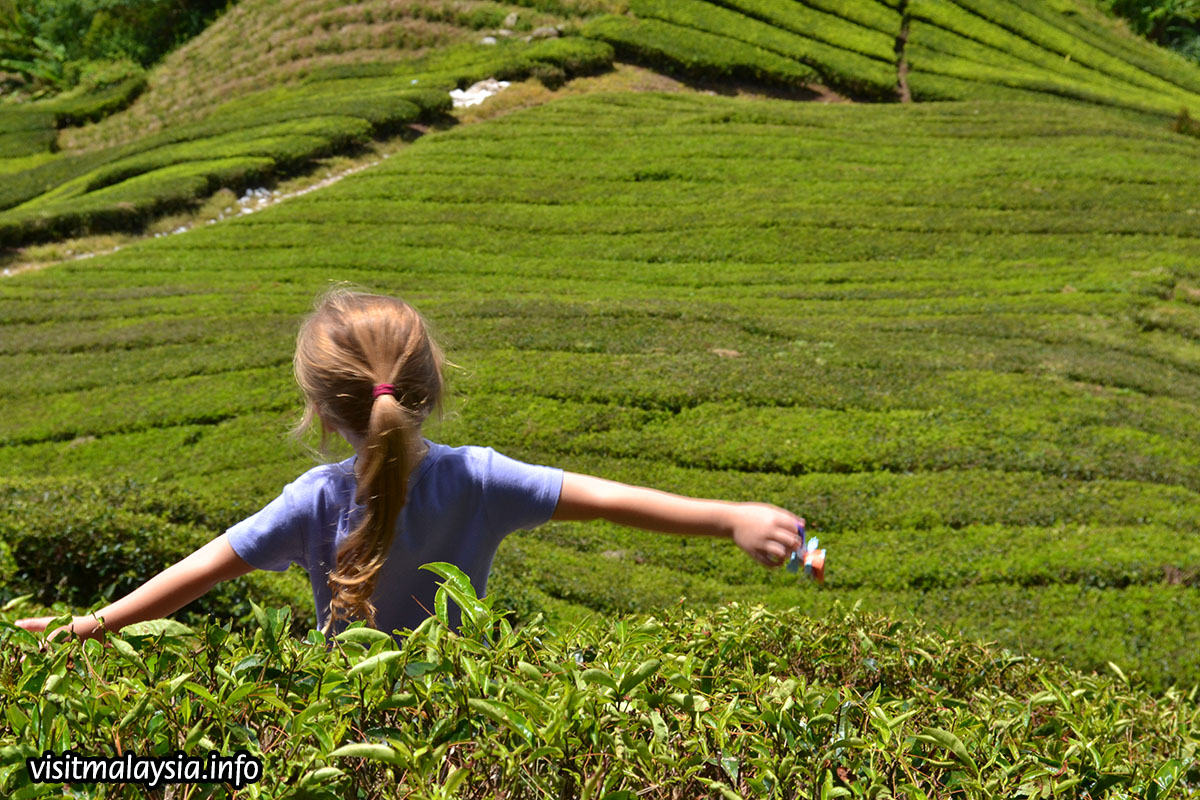
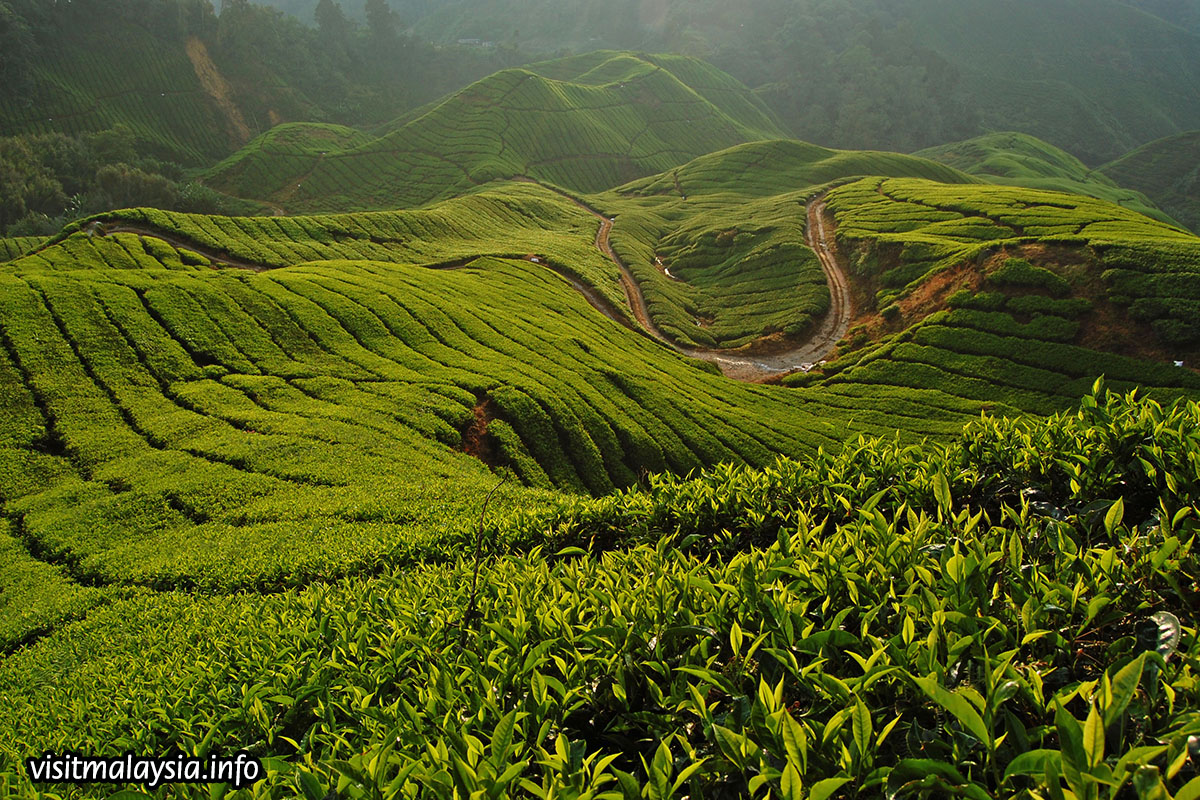
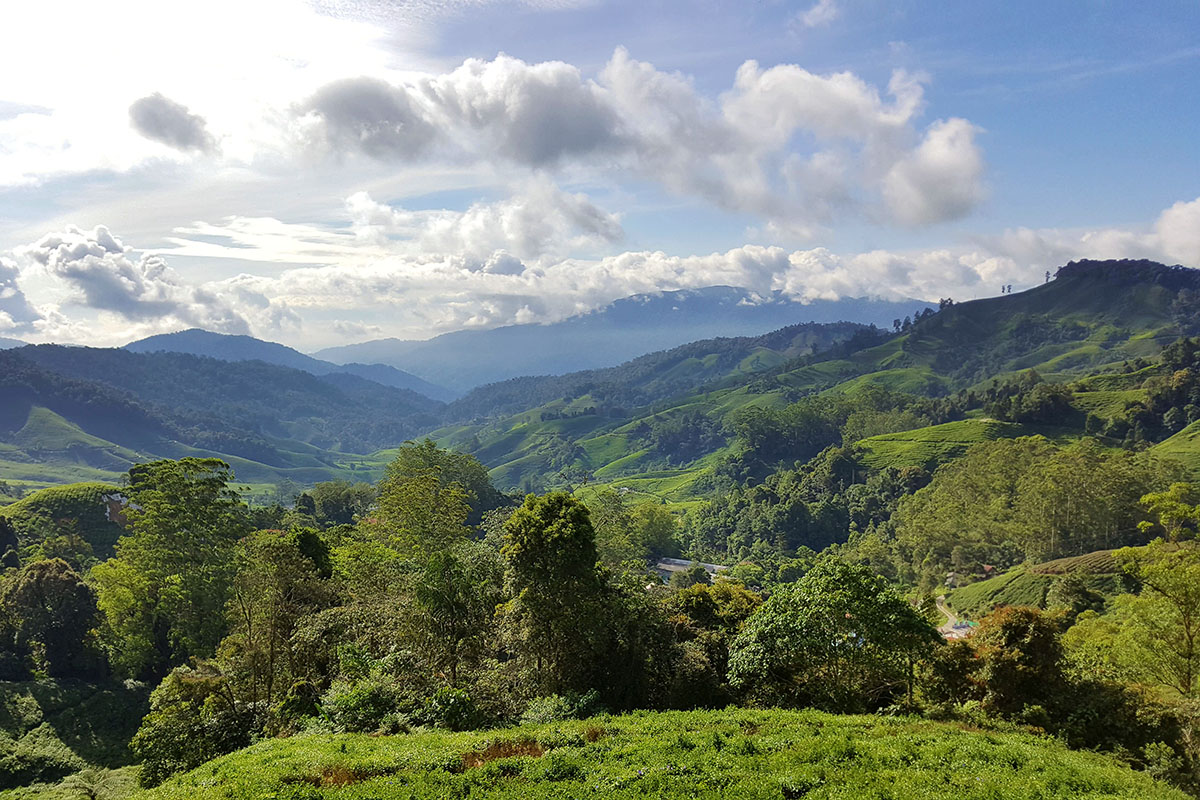
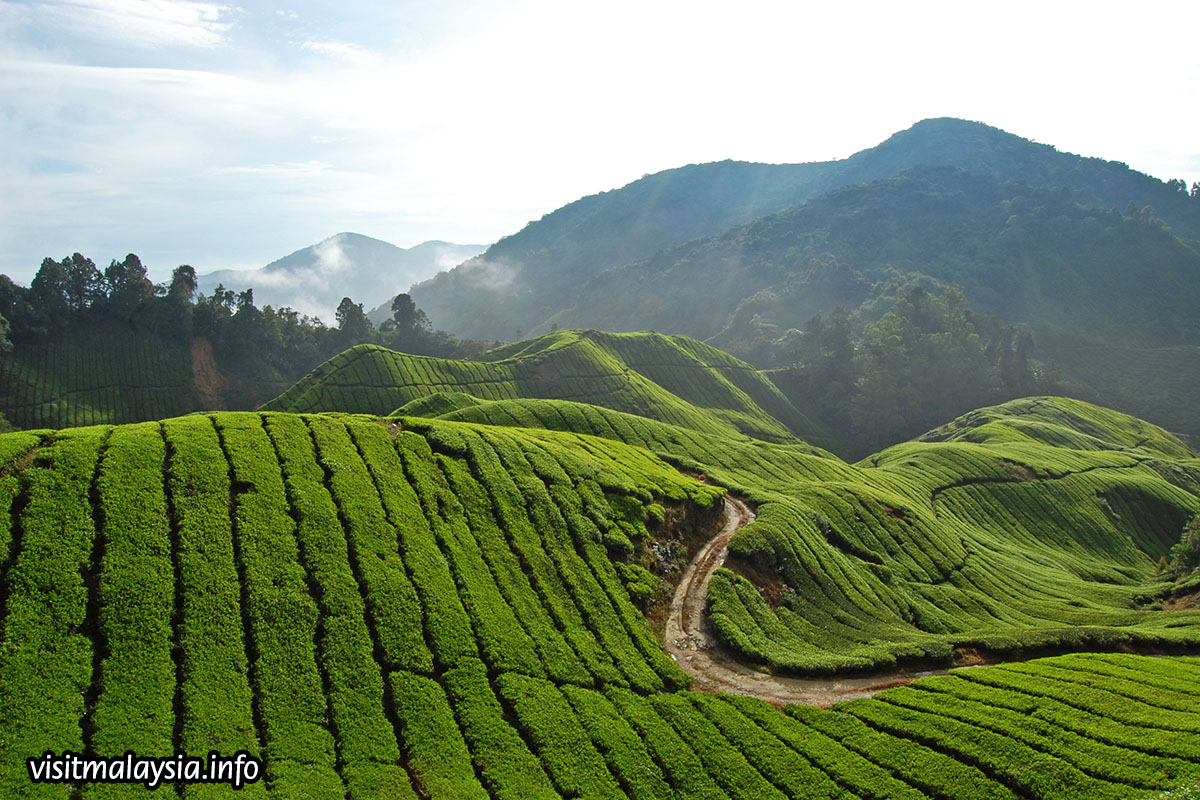
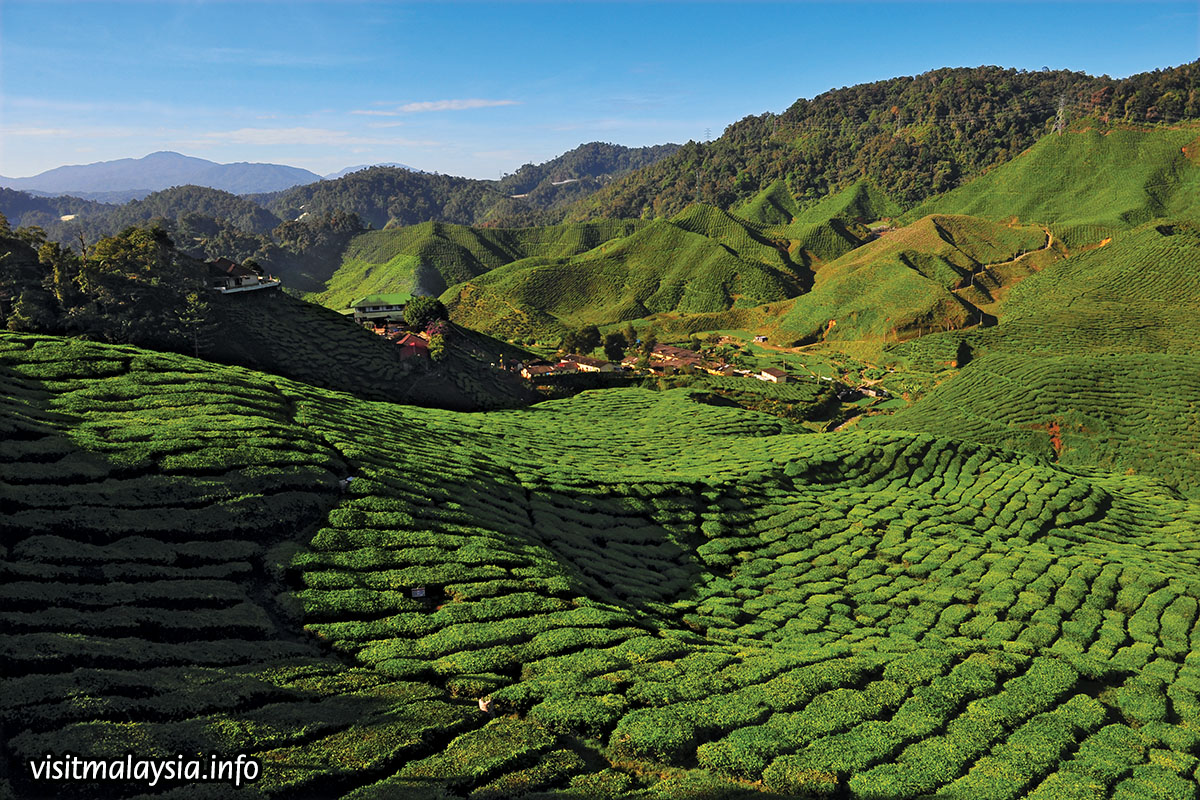
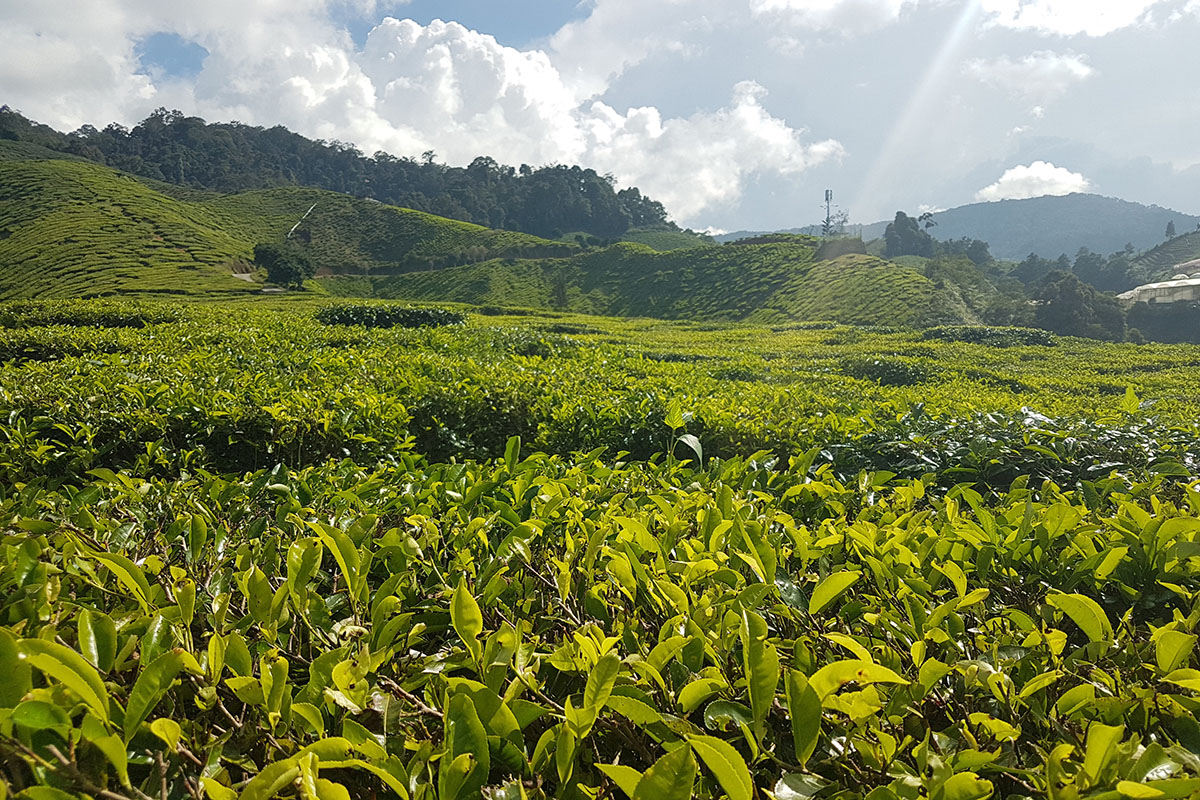
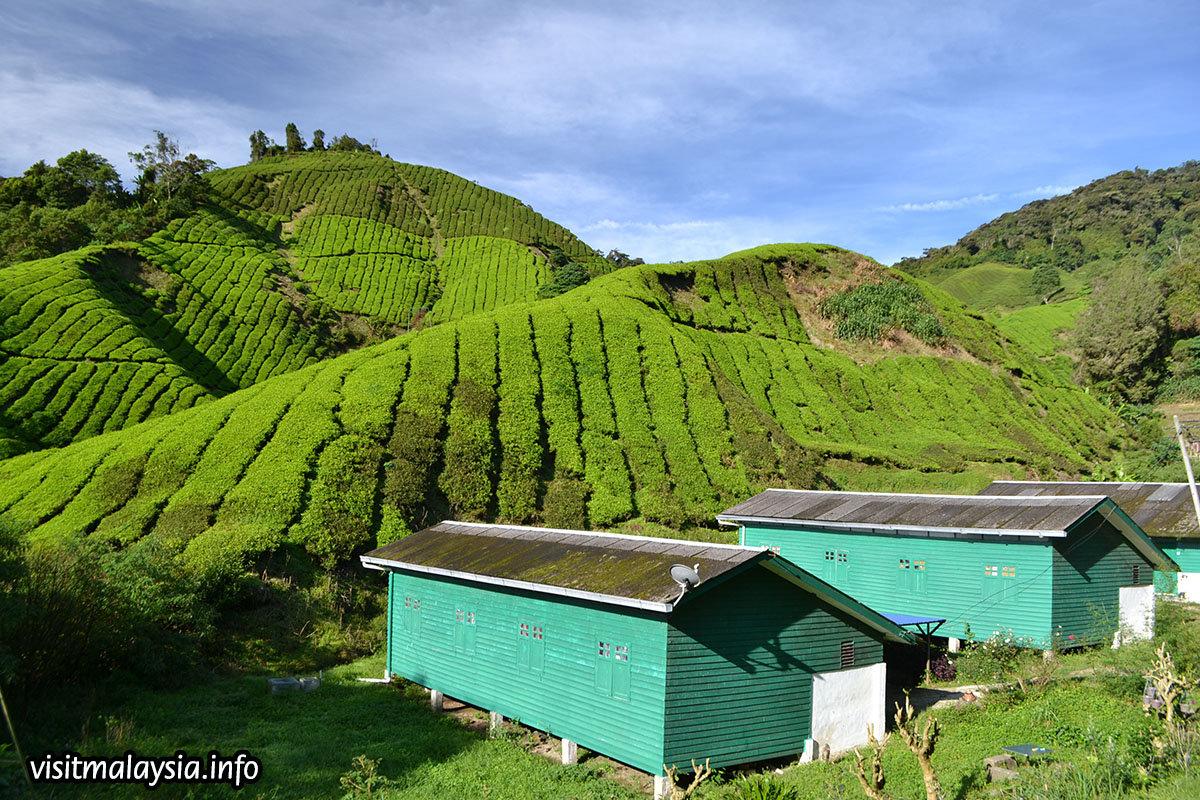
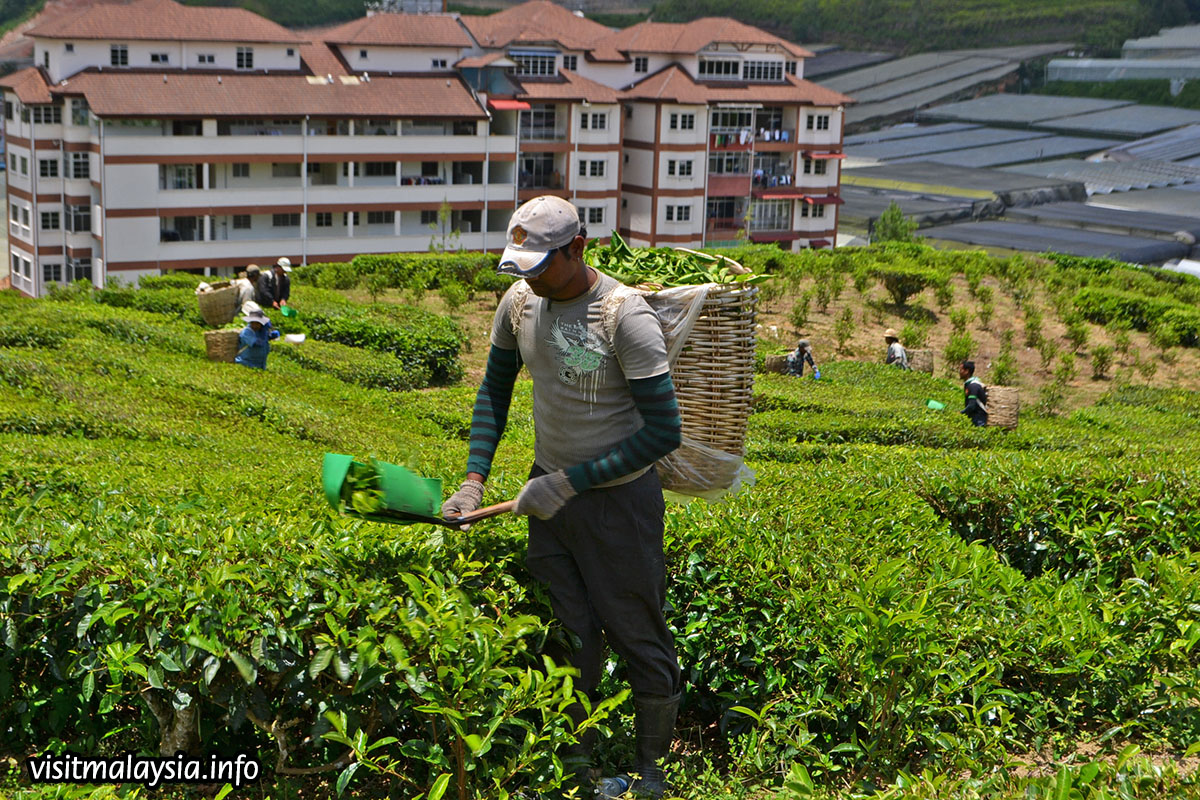
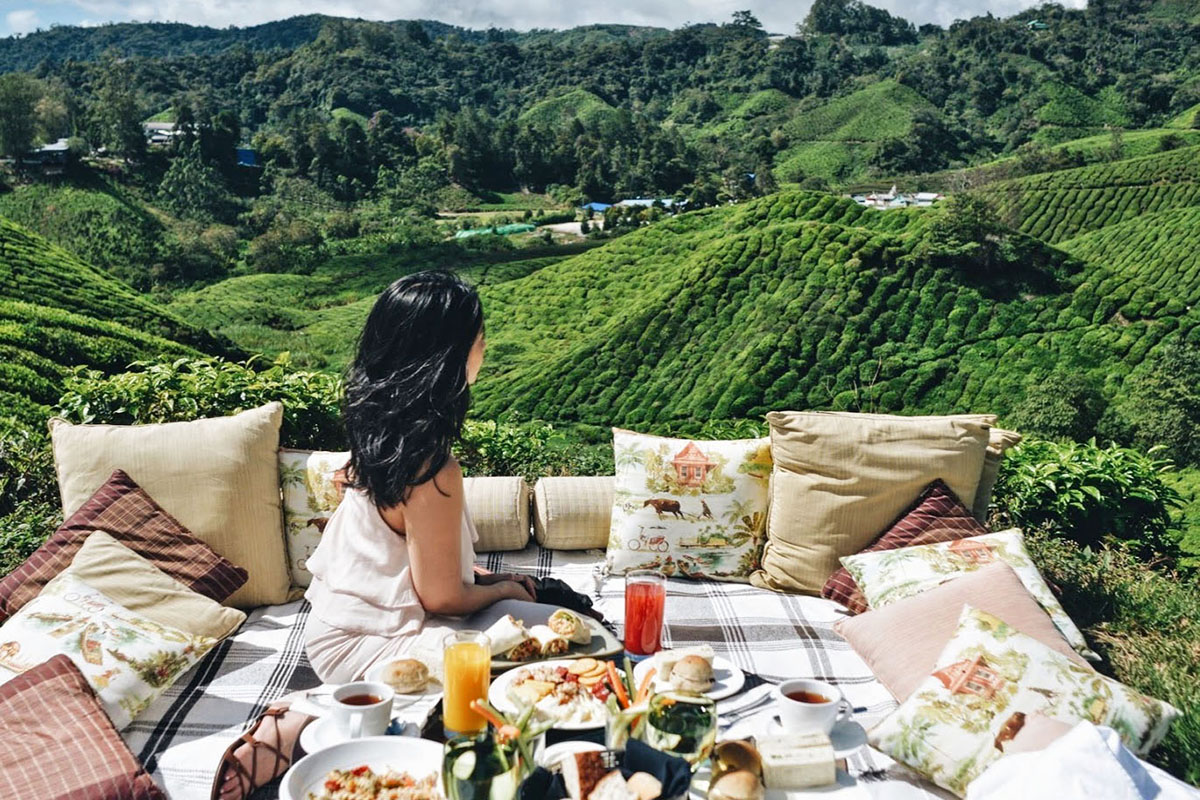
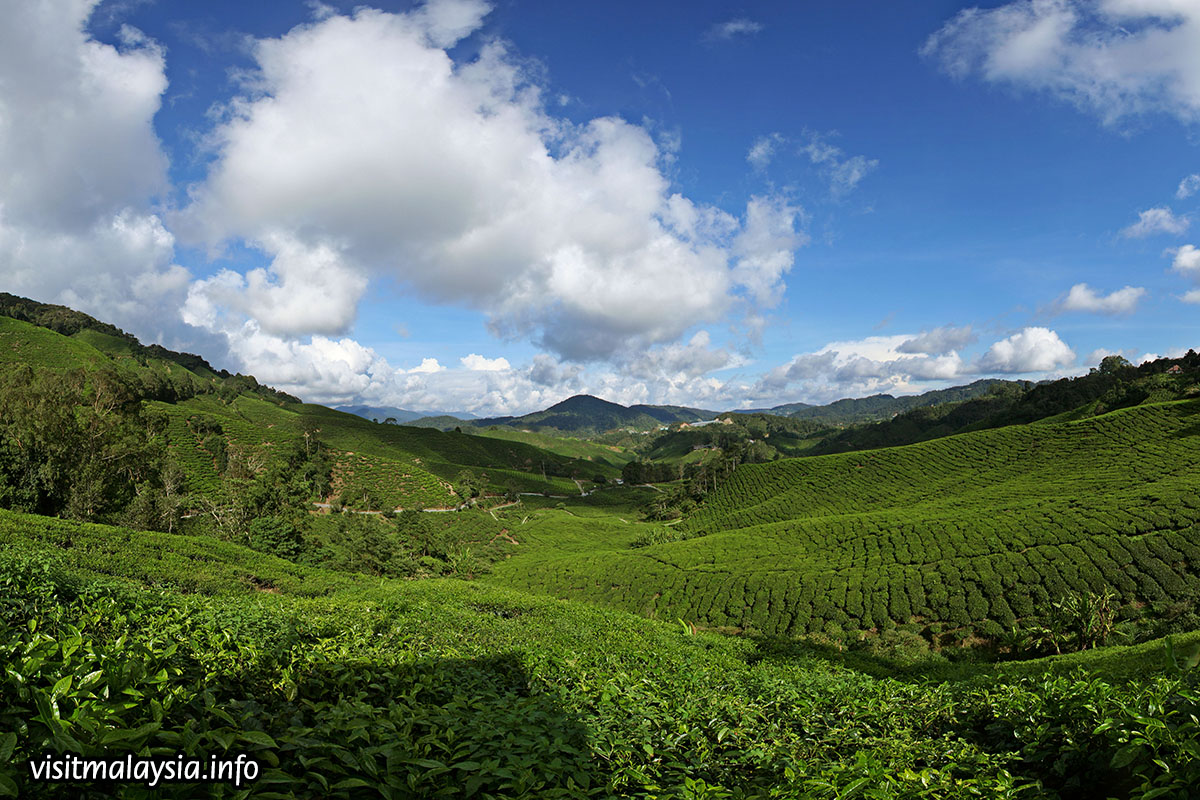
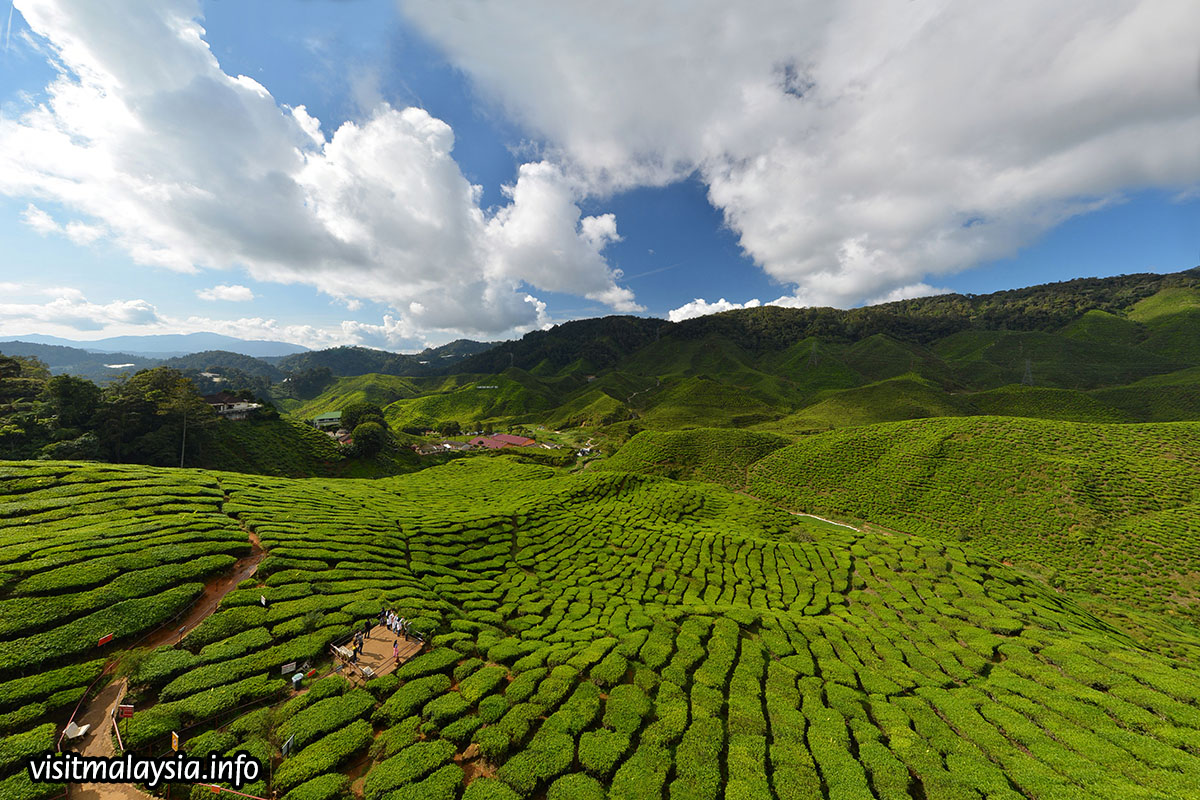
Cameron Highlands is the largest tea-growing region in Malaysia - home to vast plantations of this valuable crop that carpet the valleys in a lush sea of bright green. Tea was also one of the precursors to its development as a hill station, before its transformation into a major tourist destination.
Today, the many tea plantations that dominate the valley are instrumental in drawing the multitudes of visitors Cameron Highlands receives each year. The various estates are mostly owned by Boh, the larger group established since 1929 by colonial owners; and Bharat, a slightly more recent local company that only began full-scale operations in the 1950s.
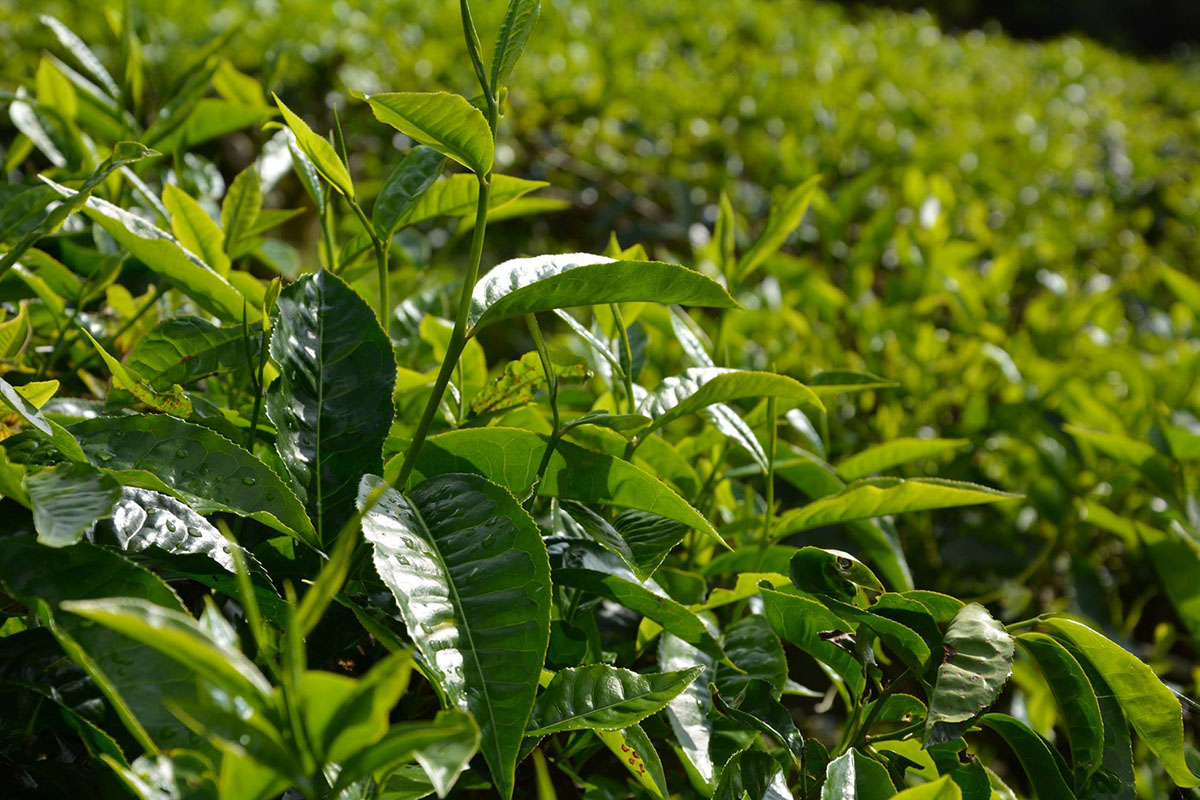
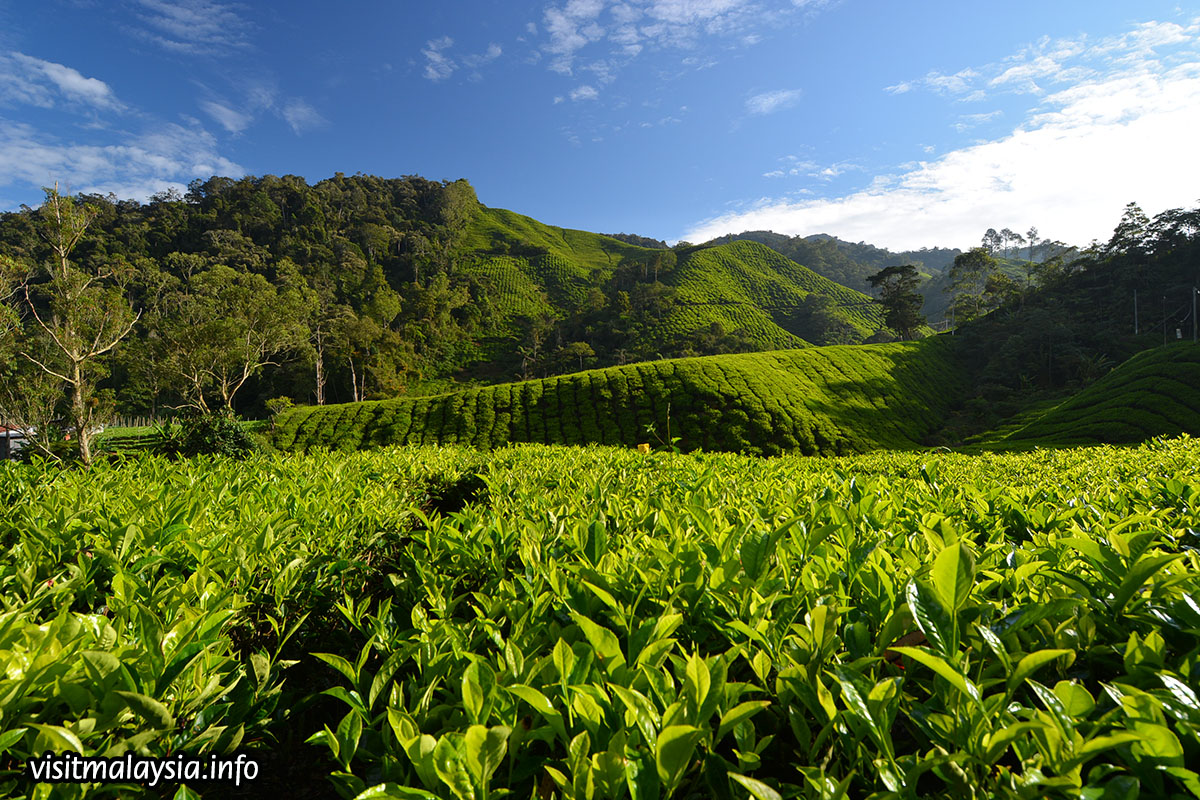
The tea plant (Camellia sinensis) is actually a tree rather than a bush as popularly regarded by most people. If left to grow in the wild, tea can grow up to 16m in height. The current method of pruning tea plants leaves them at a manageable size for ground-level harvest, while allowing for higher yield through a more compact arrangement of bushes.
The same plant is used to produce different types of tea; each undergo a different oxidation process and blend that result in their unique flavours, aroma and colour. In Cameron Highlands, black tea is the most popular variety of tea produced, followed by Oolong and green tea. The dark tint of tea is the result of its chemical compunds, chiefly being tannin leached into the water by heating.
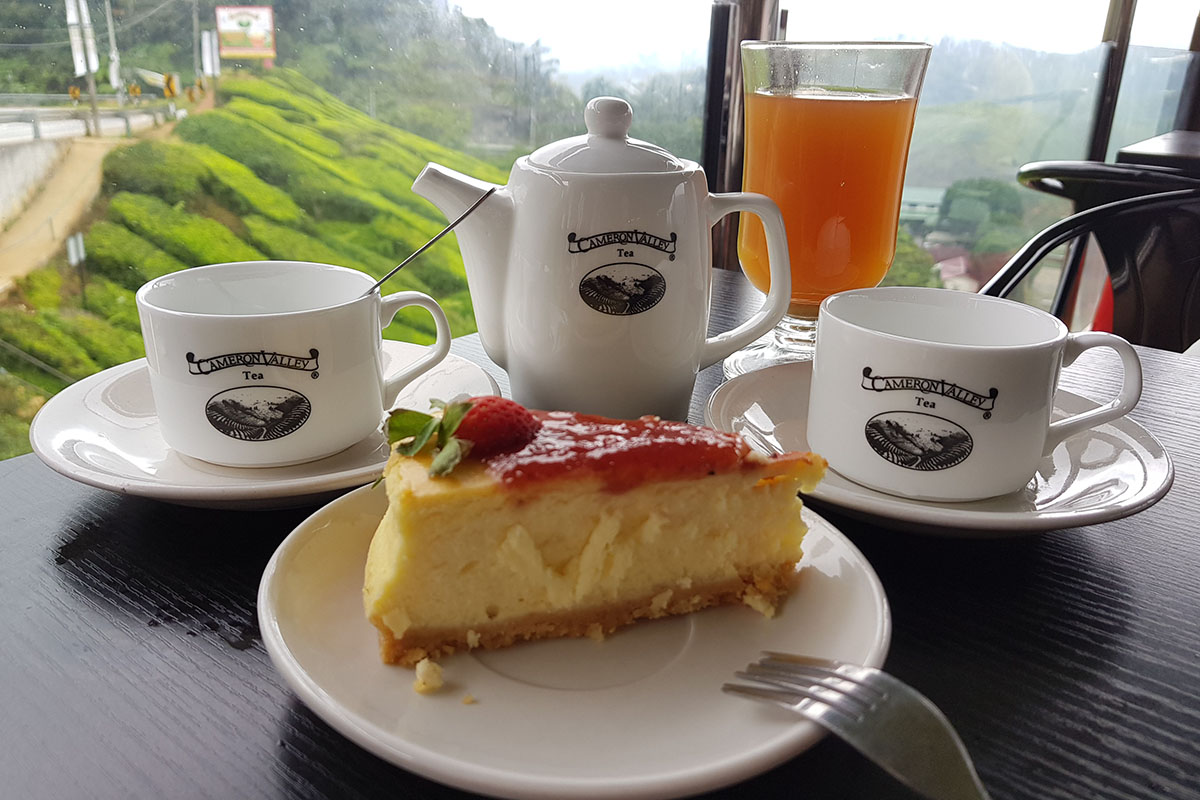
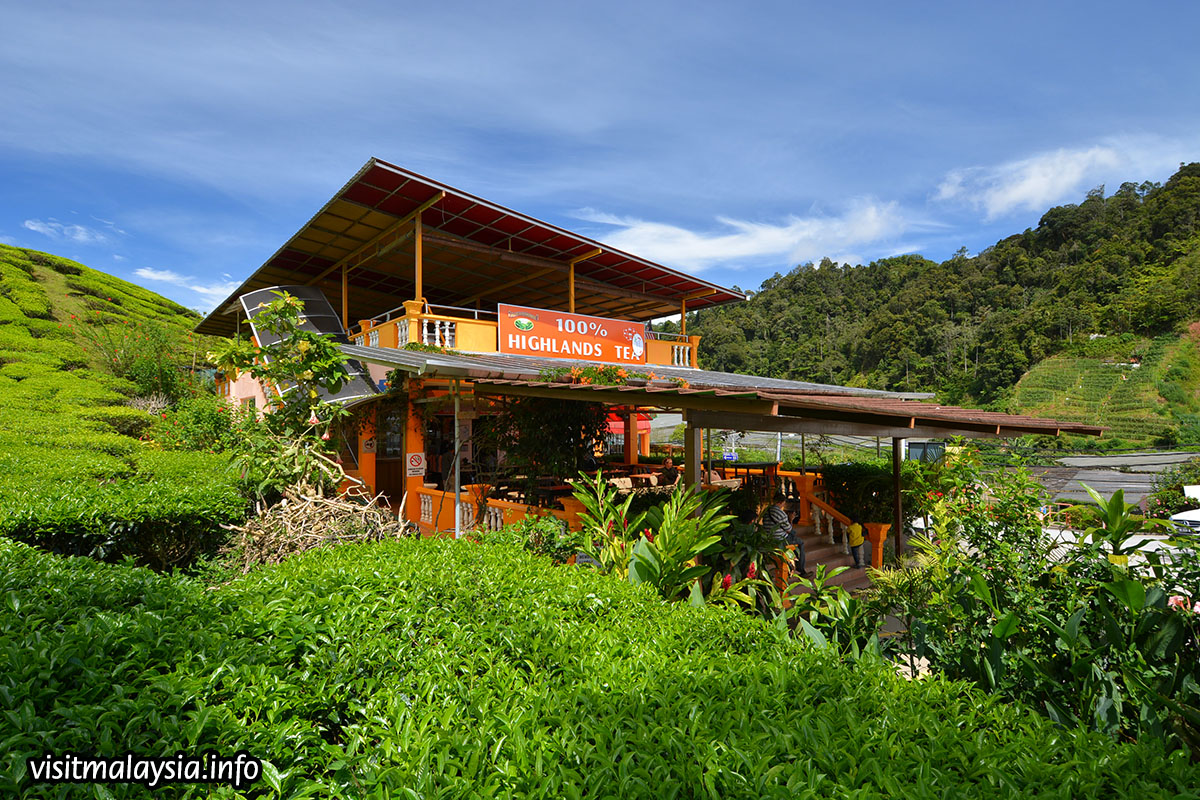
While tea produced from Cameron Highlands is not particularly exceptional, they make extremely popular products and souvenirs by value of novelty, especially when bought while visiting shops at tea plantations or neighbouring towns. Boh has the largest tea estates, covering a total 3238 hectares, with plantations and factories open to visitors at Habu in Ringlet and Sungai Palas in Brinchang.
Bharat has smaller tea fields (total 810 hectares) but more strategic positions along the main road (specifically at Tanah Rata and Kuala Terla) allowing them to capture visitors arriving from the souther (Tapah) and northern (Simpang Pulai) gateway. A large tea plantation also used to exist within Blue Valley, but it was abandoned by its owner and turned into vegetable farms.